






Safa Marwa Dua (Complete Guide with Arabic, English, Meaning, and How to Perform Sa'i)
 14 Feb 26

Ramadan Fasting Rules for Travelers and Umrah Pilgrims (Islamic Rulings + Practical Guidance)
13 Feb 26










If you are getting ready for Hajj or Umrah, one of the very first and most important steps is entering Ihram. But what exactly is Ihram in Islam? Is it only the white clothing that pilgrims wear, or is it something much deeper? In simple words, Ihram is a very special state of worship that every Muslim must enter before doing Hajj or Umrah. Without entering the Ihram in the correct way, your pilgrimage cannot officially start.
Ihram must be entered before you reach the sacred areas of Makkah and before starting the rituals near the Kaaba. It is the moment when you leave everyday life behind and enter a state of purity, humility, and full devotion to Allah. This guide will explain everything you need to know about Ihram for both Hajj and Umrah in a way that is clear, confident, and correct.
Meaning of Ihram in Islam
Before we talk about rules, clothing, and things you cannot do, it is very important to know what Ihram really means.
Meaning of Ihram in Words
The word Ihram comes from the Arabic root ḥ-r-m. This root is about something being sacred, very special, or not allowed. From the same root comes the word haram. Haram means something that is not allowed.
In simple words, Ihram means making some things not allowed for yourself. In simple life, when a Muslim enters the Ihram, some normal things are not allowed for a while.
At its heart, Ihram is about choosing to give up normal comforts for Allah. You give up your usual habits to reach a higher level of worship.
Why Ihram is Important for the Heart and Soul
Ihram is the start of a very special journey. It is not only about going to Makkah. It is also about cleaning your heart and being sincere.
When a pilgrim enters Ihram, they leave their normal life behind. They focus only on Allah. They start answering Allah with the Talbiyah prayer.
When people stand near the Kaaba in simple clothes, everyone looks the same. There are no fancy clothes, no titles, no signs of money. Ihram removes all outside differences. It shows that everyone is equal in front of Allah.
Ihram is a State, Not Just Clothes
Lastly, many people think Ihram is only the white sheets men wear. But these clothes are only one part of the Ihram.
Ihram is, first of all, a state of heart and intention. The clothes show the state on the outside. But the real change happens inside a person.
When to Enter Ihram
Knowing when to enter Ihram is just as important as knowing how to enter it. Timing is very important. This is why understanding Miqat and its rules is very important for every pilgrim.
What Is Miqat
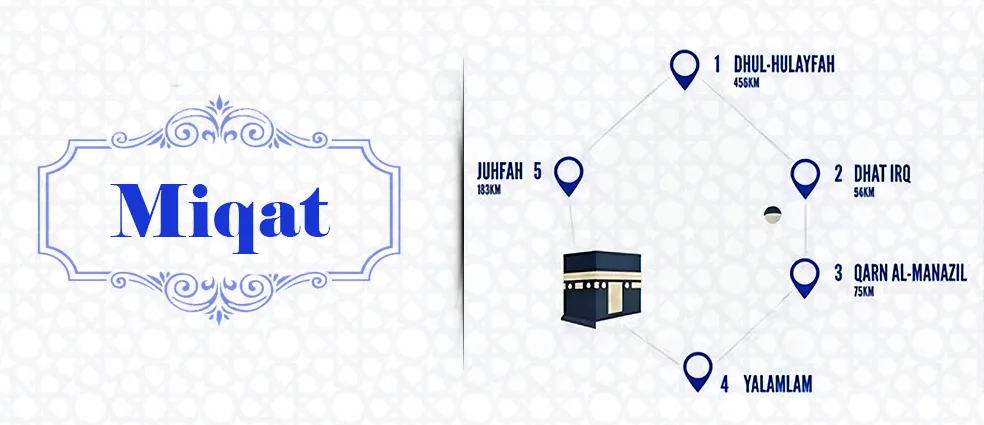
Miqat is a special boundary set by the Prophet Muhammad, PBUH. A pilgrim who wants to perform Hajj or Umrah must not pass these boundaries without entering the state of Ihram.
You can think of Miqat like a spiritual checkpoint. Once you pass it, you must already be in Ihram. It is the point where ordinary life changes into sacred worship.
There are different Miqat places depending on where you are coming from. These places were set for people traveling from different regions.
Some well-known Miqat points are
- Dhul-Hulayfah for pilgrims coming from Madinah
- Juhfah for pilgrims coming from the west
- Qarn al-Manazil for pilgrims coming from the Najd region
Miqat for Umrah
For Umrah, you must enter Ihram before passing your Miqat boundary.
This means you should:
- Perform ghusl or the purification bath before reaching Miqat
- Wear the Ihram clothes
- Make your intention or niyyah
- Begin reciting the Talbiya
Miqat for Hajj
For Hajj, entering Ihram depends on which type of Hajj you are performing.
- Hajj al-Tamattu' means pilgrims do Umrah first, then exit Ihram and then enter Ihram again for Hajj on the 8th of Dhul Hijjah
- Hajj al-Qiran means pilgrims stay in Ihram from Miqat until they finish Hajj
- Hajj al-Ifrad means pilgrims enter Ihram only for Hajj and stay in that state until the major Hajj rituals are finished
Miqat Considerations for International Travelers
Modern travel has made Miqat rules a little more complicated, especially for pilgrims flying into Saudi Arabia. If you are traveling by airplane, most pilgrims enter the Ihram at the airport before leaving. Alternatively, you may wear Ihram clothes before the flight and make your intention during the flight when the pilot says you are crossing the Miqat.
Moreover, if you are landing directly in Jeddah and will pass Miqat while in the air, you must already be in Ihram before crossing it in the sky.
For travelers going from Madinah to Makkah by road, Ihram should be entered at Dhul-Hulayfah before starting the journey.
Ihram Clothing Guidelines
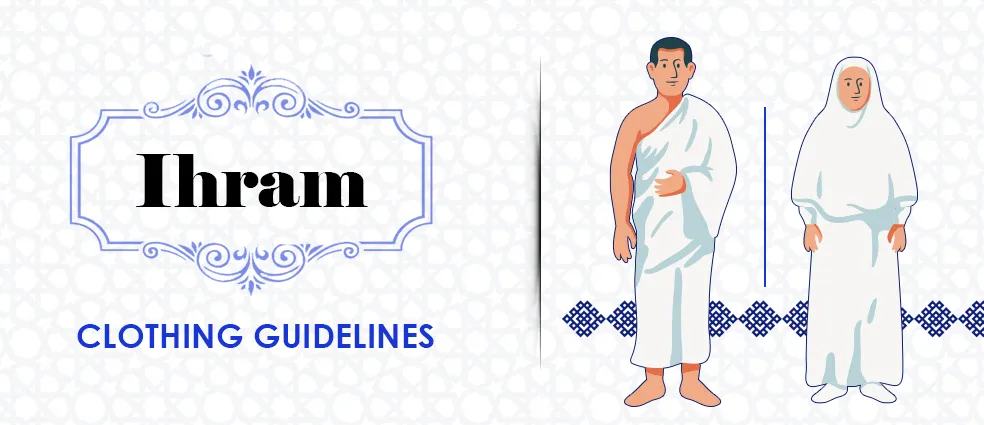
One of the most visible parts of the Ihram is the clothing. But these clothes are not picked just for style or comfort. They show humility, equality, and that a person is not focused on worldly things.
For Men
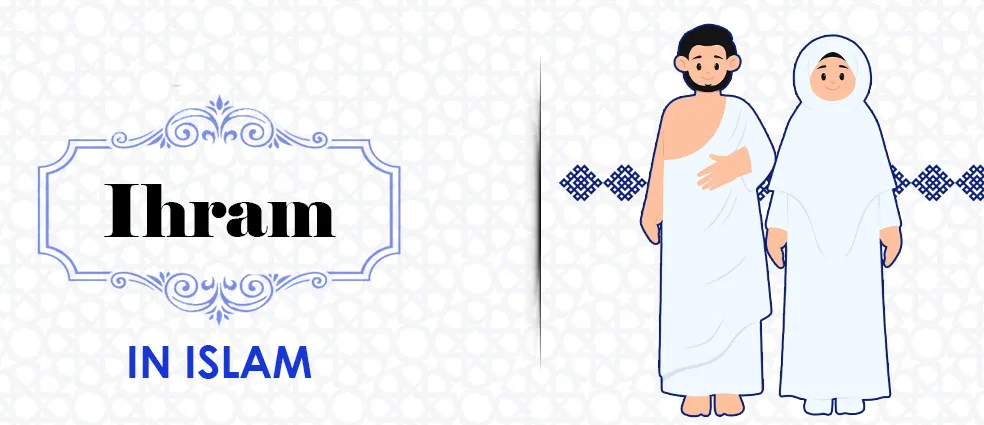
Two White Sheets
Firstly, men in Ihram must wear two unstitched white sheets. The first sheet is called Izar. It is wrapped around the lower body and should cover from the waist to at least the knees. The second sheet is called Rida. It is draped over the upper body and covers the shoulders and the chest. These sheets must not be stitched or made to fit the body like normal clothes. The reason for this is to remove differences based on wealth, fashion, or social status. When millions of men wear the same clothing, it shows that everyone is equal before Allah.
Footwear Rules
Footwear during Ihram must leave certain parts of the foot open. Men may wear sandals or slippers. They may wear footwear that does not cover the ankles or footwear that leaves the top of the foot open. So, it is best to prepare suitable sandals before travel.
For Women
The clothing rules for women are different and often misunderstood. Women do not wear two white sheets like men. Their rules focus on modesty instead of wearing the same clothes as others.
Modest Dress Requirements
Women in Ihram may wear regular modest clothing. They may wear loose-fitting garments. This could include long dresses or abayas. The clothing must cover the whole body except the face and hands.
Face and Hand Covering Clarification
Moreover, one area that confuses people is covering the face. Women in Ihram should not wear a niqab. They should not wear gloves. But if men who are not close relatives are nearby, a woman may loosely lower part of her headscarf over her face. The key point is that the face should not be covered with a niqab made for that purpose.
Permissible Colors and Fabrics
Lastly, unlike men, women are not limited to wearing white. They may wear any modest color. Also, they can wear any breathable fabric that is suitable for the weather. However, it's important that the clothing should not be decorative or flashy. It should also not be perfumed or scented.
Rules and Prohibitions During Ihram
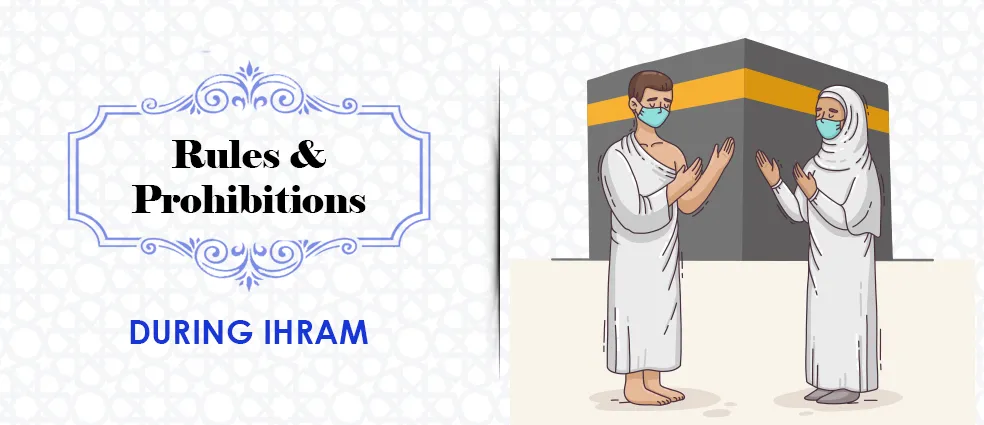
Entering the Ihram is not just about wearing special clothes. It is about starting a disciplined spiritual state. When you make your intention and begin saying the Talbiyah, some normal actions become temporarily not allowed. So, let us explain them in detail.
Grooming Restrictions
One of the main rules during Ihram is about grooming. While in Ihram, pilgrims must not cut or trim their hair. They must not shave any part of the body. Also, they cannot clip or trim their nails. This includes small actions like trimming a mustache or removing stray hairs on purpose.
The reason for this rule is to show humility and submission. Pilgrims are not focusing on how they look or on beautifying themselves. They are focusing on worship and devotion.
Use of Perfume and Scented Products
Moreover, fragrance is not allowed once you enter the Ihram. This includes perfume and cologne. It also includes scented lotions, soaps, shampoos, and deodorants.
It is allowed to use perfume before entering the Ihram. But after making the intention and saying the Talbiyah, no new fragrance may be used.
Marital Relations
Marital intimacy is also not allowed during Ihram. This rule shows that Ihram is a sacred state. Pilgrims must fully focus on worship and avoid worldly desires.
Hunting and Harming Animals
While in Ihram, pilgrims must not hunt animals. They also must not help anyone to hunt or harm animals on purpose. This rule is true even outside the Haram area. However, dangerous animals like snakes or scorpions may be killed for safety.
General Conduct and Behavior
Lastly, Ihram is also about how a person behaves. Allah wants pilgrims to avoid arguing. They should avoid fighting, bad language, and sinful behavior.
Travel can be stressful. Crowds, delays, heat, and tiredness can test patience. But Ihram asks pilgrims to stay calm and behave with dignity.
Step-by-Step: How to Enter Ihram
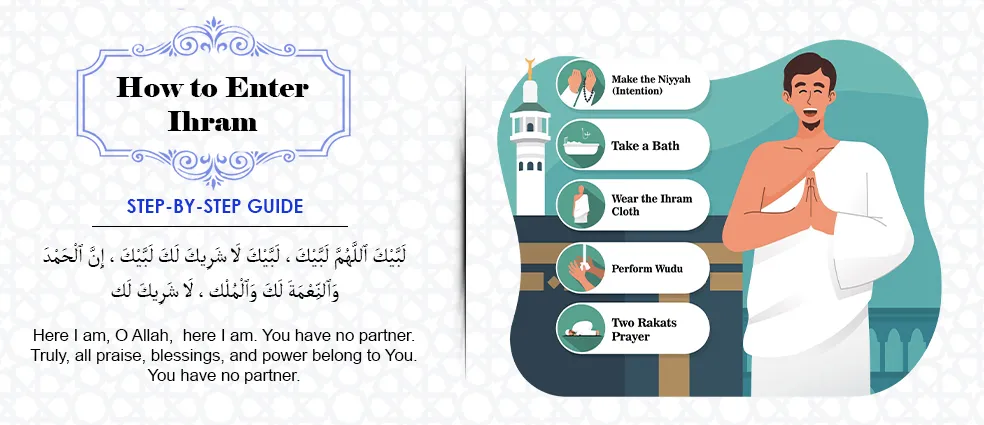
Entering the Ihram is not difficult, but it must be done the right way. Below is a clear, step-by-step guide to help you enter Ihram properly and with confidence.
Perform Ghusl
Firstly, before putting on the Ihram clothes, it is very good to do Ghusl. Ghusl is a full-body bath that cleans both your body and your spirit. It helps you get ready for this sacred state.
During Ghusl, you should wash your whole body carefully. Wash your hair and scalp. Trim your nails before entering Ihram. Remove unwanted hair if needed. It is very important to finish cutting nails or shaving before you enter the Ihram.
If water is not available, you can do Tayammum. Tayammum is a dry purification using clean earth.
Wear the Ihram Garments
After you clean yourself, you should put on the correct Ihram clothing. The details about these are explained above.
Make the Intention (Niyyah)
After wearing the right clothes, the next step is to make your intention for Hajj or Umrah. The intention is made in your heart. You do not have to say a special phrase, but many people say it out loud to focus.
For example, you can say:
- O Allah, I intend to perform Umrah
- O Alla,h I intend to perform Hajj
Recite the Talbiyah
After you make your intention, you must start reciting the Talbiyah. This officially puts you in the state of Ihram.
In Arabic it is:
لَبَّيْكَ ٱللَّهُمَّ لَبَّيْكَ، لَبَّيْكَ لَا شَرِيكَ لَكَ لَبَّيْكَ، إِنَّ ٱلْحَمْدَ وَٱلنِّعْمَةَ لَكَ وَٱلْمُلْك، لَا شَرِيكَ لَك
The transliteration is:
Labbayka Allahumma Labbayk Labbayka la sharika laka labbayk Innal hamda wan ni‘mata laka wal mulk la sharika lak
The meaning is:
Here I am, O Alla, here I am. You have no partner. Truly, all praise, blessings, and power belong to You. You have no partner.
Men are advised to say the Talbiyah out loud. Women should say it quietly.
Cross the Miqat Boundary
The last step is to cross the Miqat boundary while wearing Ihram. Miqat is a special area you should not pass without entering Ihram.
If you cross Miqat after doing these steps, you are officially in the sacred state of Ihram.
Common Mistakes to Avoid in Ihram
Entering the Ihram is a very holy and special moment. It changes your normal life into a time of worship. But even small mistakes can cause problems. So, here are the most common mistakes people make in Ihram and how to stay safe from them.
Wearing Prohibited Clothing
Firstly, many men think Ihram only means wearing white clothes. This is not fully correct. Men must wear two simple white cloth pieces, as explained above. Men are not allowed to wear stitched clothes. Stitched clothes means normal shaped clothes like shirts, pants, underwear, or any clothes sewn to fit the body. If a man wears stitched clothes on purpose, he may have to give fidya as a penalty.
There are other clothing mistakes, too. Men should not wear socks that cover the ankles. Moreover, they should not cover their head with a cap or cloth, or wear full shoes that cover the toes and ankles. Instead, they should wear simple sandals that leave the toes and ankles open. Even small things like wearing a stitched undershirt are not allowed. All of this must be avoided to follow the rules of Ihram correctly.
Forgetting to Make Intention Before Miqat
Ihram is not only about clothes. It is also about intention. Intention is called niyyah. Niyyah means making a clear decision in your heart that you are starting Hajj or Umrah for the sake of Allah. Some people cross the Miqat without making this intention.
If someone crosses Miqat without making an intention, it is a serious mistake. They may need to go back to Miqat to fix it. If they cannot return, they may need to give fidya. To avoid this mistake, always make your intention before you cross Miqat.
Using Perfume or Scented Products
Another common mistake is using perfume after entering the Ihram. Some people also use scented soap, deodorant, or creams. They may think it is not a big problem. But in Ihram, scented products are not allowed. This is because Ihram is a time of simplicity and purity. Strong smells go against this simple state.
Cutting Hair or Nails
Moreover, in Ihram, you are not allowed to cut your hair or trim your nails. Many people forget this because they are used to their normal grooming routine. If someone cuts hair or nails on purpose during Ihram, they may need to give fidya.
Confusion About Rules for Women
Lastly, some women think they must wear white clothes like men. This is not true. Women can wear any color of clothing. The clothes must be loose and modest. Women are also not allowed to wear a face covering or gloves in Ihram unless there is a real need in front of men who are not close family. These men are called non-mahram. Non-mahram means a man or woman can marry someone who is not their close relative.
Another mistake is wearing makeup or scented creams. Light unscented products are allowed. But heavy makeup and beautifying should be avoided. Ihram is about simplicity and focusing on worship, not looking beautiful.
Spiritual Significance of Ihram
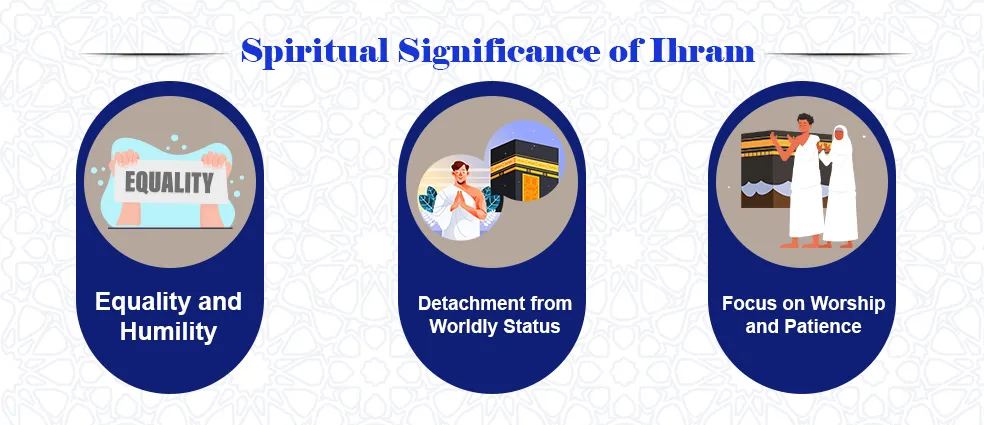
Entering Ihram is not just about wearing white clothes or following some rules. It is a very special and deep spiritual experience.
Equality and Humility
Firstly, one of the strongest lessons of Ihram is that all Muslims are equal. When millions of people gather in Makkah wearing simple white clothes, no one looks rich or poor. No one looks more important than another person. Differences like money, social position, race, and nationality are no longer visible. Everyone stands next to each other wearing the same simple clothing.
This shows that in front of Allah, every person is equal. What matters is not how someone looks or how much money they have. What matters is faith and sincerity. Ihram removes pride and ego from the heart. It helps people stand before Allah with honesty and true humility.
Detachment from Worldly Status
Moreover, Ihram also teaches people to step away from worldly life. During this special state, pilgrims leave their normal clothes, fashion choices, and daily comforts. They also stop certain habits like cutting hair or using perfume. Men do not wear stitched clothes during this time. These rules help people move away from their usual identity.
This short time away from normal life works like a reset for the soul. It reminds pilgrims that the true purpose of life is to worship Allah, not to collect wealth or chase status.
Focus on Worship and Patience
Lastly, the rules of Ihram are not there to make life hard. They are there to help the pilgrim become more aware and focused. While in Ihram, even simple actions become meaningful. A person thinks carefully before speaking or acting.
Patience grows when a person follows the rules, controls anger, and stays away from arguments. Similarly, mindfulness grows when a person pays attention to their words, actions, and intentions.
In this way, Ihram becomes like training for the soul. The lessons learned during this time can stay with a person even after the journey is finished.
Ihram Violations and Fidya (Compensation)
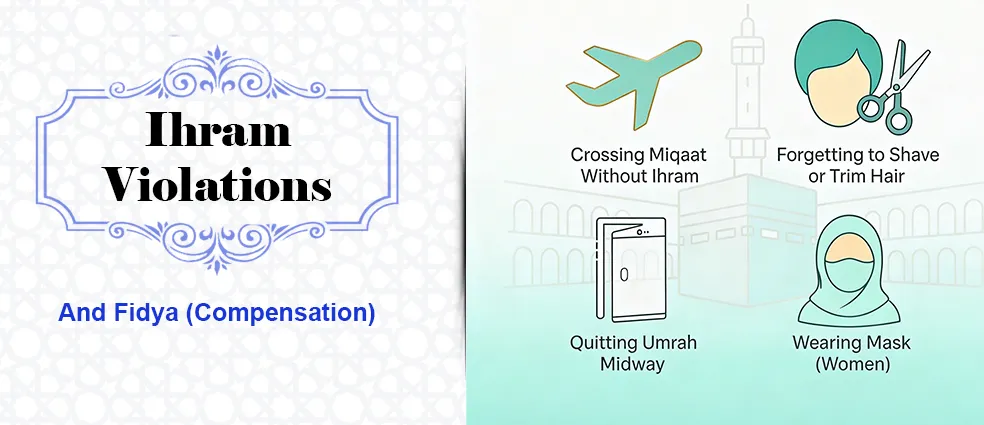
Entering the Ihram is a very holy and serious part of Hajj and Umrah. When a person enters the Ihram, they make a strong promise to follow special rules for the sake of Allah. This stage needs care and attention. The rules of Ihram help a person become humble, patient, and focused on worship. However, people can still make mistakes. If someone breaks the rules of Ihram on purpose or by accident, Islamic law gives a way to fix the mistake. This is called Fidya, which means compensation. It is very important to know what actions break the rules and how to fix them so that your Hajj or Umrah stays correct and full of reward.
What Counts as a Violation
Ihram has clear rules that every pilgrim must follow. These rules help a person stay disciplined and think only about worship. Breaking these rules is called a violation. Some violations are small, and some are serious. Below are common violations of Ihram.
- Cutting Hair or Nails
- Wearing Prohibited Clothing
- Applying Perfume or Fragrances
- Marital Relations
- Hunting or Harming Animals
- General Misconduct
Some violations happen by accident, and some happen on purpose. If a mistake happens by accident and the person fixes it quickly, the penalty may be lighter than if it were done on purpose. Every pilgrim should learn the rules carefully and try their best to follow them.
Types of Compensation or Fidya
Fidya is the way a pilgrim fixes a mistake made during Ihram. It helps clean the mistake and brings peace to the heart. The type of Fidya depends on what rule was broken and whether the person can fix it right away. Below are common types of Fidya.
Fasting
A pilgrim may need to fast for one to three days, depending on how serious the mistake was. Fasting means not eating or drinking from dawn to sunset. It shows regret and helps a person return to spiritual balance.
Feeding the Poor
Another way to give Fidya is by feeding poor people. The pilgrim gives food to needy individuals or families. This not only fixes the mistake but also brings a reward because it helps others.
Animal Sacrifice
Moreover, in some situations, a pilgrim must sacrifice a sheep, goat, or another allowed animal. The meat is given to poor people. This act shows humility and obedience to Allah.
When Fidya Is Required
Not every small mistake in Ihram needs Fidya. Compensation is usually required when the person breaks a rule on purpose and could have avoided it. It is also required for clearly prohibited acts such as cutting hair, wearing forbidden clothing, or using perfume. If the mistake cannot be corrected while still in Ihram, then Fidya may be needed.
If a mistake happens by accident and the pilgrim stops as soon as they realize it, Fidya may not always be required. However, the person should feel sorry, ask Allah for forgiveness, and try not to repeat the mistake.
Ihram Checklist for Pilgrims
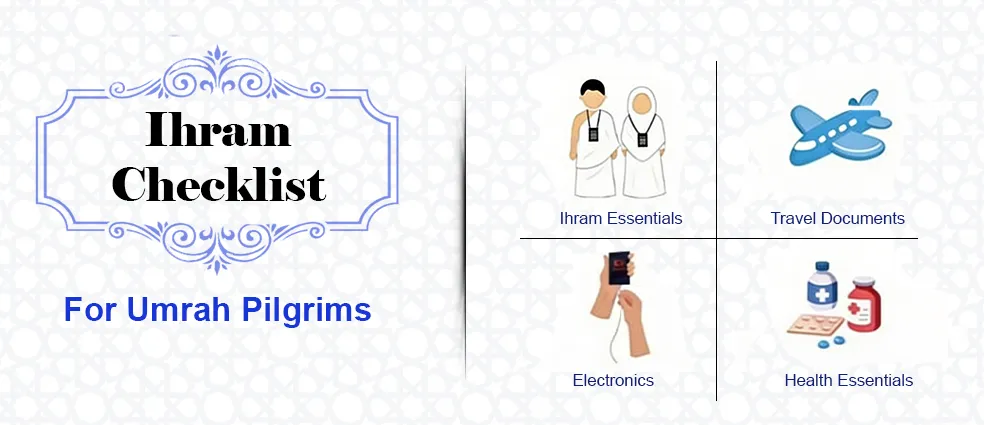
Getting ready for Ihram can feel scary, especially if this is your first time going on pilgrimage. This checklist explains everything you need to prepare before you enter the sacred state of Ihram.
Ihram Clothes and Sandals
The most important things on your list are your Ihram clothes. The details of the clothing and footwear are explained above. So, it is important for pilgrims to follow them carefully.
Make sure all clothes are clean and light. They should be easy to wear and manage. This is very important because you may walk or stand for long hours during the rituals.
Unscented Toiletries
After you enter the Ihram, you are not allowed to use perfume or anything with fragrance. Fragrance means a nice smell added to a product. So you must pack personal care items that have no smell.
Belt, Pouch, or Small Bag
When wearing the Ihram, it can be hard to carry things. This is especially true for men because their clothes are loose and have no pockets. A small belt bag or pouch can help a lot. You can use it to:
- Carry copies of your ID and passport.
- Keep your money or credit cards inside.
- Carry your mobile phone.
- Keep your travel tickets or boarding passes.
This helps you keep your important items safe. It also helps you follow the rules of Ihram clothing. Choose a light and simple bag that does not make it hard for you to move during the rituals.
Prayer and Dua Book
Moreover, getting ready in your heart is just as important as getting ready with your things. During Ihram, you will spend a lot of time in prayer. You will also do dhikr. Dhikr means remembering Allah by saying words of praise. You will also make supplication. Supplication means asking Allah for what you need.
So, it is helpful to carry a small book or pocket guide. This book can have important duas for Ihram. It can also have the words of the Talbiyah.
This is very helpful if reading Arabic is hard for you. Many pilgrims also carry a small notebook. In it, they write their personal prayers and wishes. This helps them think deeply and stay focused during the rituals.
Travel Documents
Lastly, even though this journey is about worship, you must also think about important papers. Before you enter Ihram, make sure you have your passport and extra copies. Also, ensure you have your Umrah or Hajj visa.
Keep your airline tickets or travel confirmations with you. Also, keep details of where you will stay in Makkah and Madinah. Have the contact number of your tour operator or group leader.
Keep all these papers in your pouch or travel bag in a neat way. This will stop you from feeling stressed. It will help you focus on your worship instead of worrying about travel problems.
Difference Between Ihram for Hajj and Umrah
The idea of Ihram is the same for both Hajj and Umrah. But there are small differences in how it is followed, how long it lasts, and which acts of worship are done in each journey. Knowing these differences is very important.
|
Aspect |
Ihram for Umrah |
Ihram for Hajj |
|
Timing |
Can be performed at any time of the year |
Must be performed during the specific days of Dhul Hijjah |
|
Duration |
Lasts until completion of Tawaf, Sa'i, and hair cutting (Halq/Taqsir) |
Lasts several days, from entering Miqat to completing all Hajj rituals, including standing at Arafat and stoning of Jamarat |
|
Intentions (Niyyah) |
Niyyah is for Umrah only |
Niyyah is for Hajj (Hajj al-Tamattu, Hajj al-Qiran, or Hajj al-Ifrad) |
|
Ritual Sequence |
Tawaf → Sa'i → Halq/Taqsir → Exit Ihram |
Multiple rituals: Tawaf, Sa'i, standing at Arafat, Muzdalifah, Mina, stoning Jamarat, sacrificing an animal, Halq/Taqsir |
|
Restrictions |
Same Ihram prohibitions |
Same prohibitions, but lasts longer, testing patience and devotion over multiple days |
|
Complexity |
Shorter, simpler, suitable for all pilgrims |
More complex, requires careful planning and following specific Hajj days |
Final Tips for a Smooth Ihram Experience
Entering the Ihram is the start of a very special and holy journey in a Muslim's life. At first, the rules and steps may feel confusing or hard to understand. But if you prepare a little before you go, your journey can be calm, easy, and full of blessings. So, here are some important tips to help you stay focused and avoid common mistakes.
Learn the Rules Before You Go
Before you travel, take time to learn the rules of Ihram. Understand what you are allowed to do and what you are not allowed to do.
Be Patient and Stay Calm
Ihram is a time to control yourself and behave well. Do not argue with people. Do not get angry. Speak kindly and act with respect. The rules of Ihram teach you to be humble, patient, and close to Allah.
Stay Clean and Comfortable
Lastly, keep your Ihram clothes clean. Drink enough water so you do not feel weak. Wear sandals that feel comfortable on your feet. When your body feels comfortable, it is easier to focus on prayer and worship instead of feeling tired or upset.
If you are planning your journey soon, proper guidance and organized travel arrangements can make your experience smoother and more focused on worship. You may explore Alhamd Travel's Umrah packages to ensure a comfortable and well-coordinated pilgrimage.
FAQs
What is Ihram in simple words?
Ihram is a state a Muslim enters before performing Hajj or Umrah. It involves wearing specific clothing and following rules that focus on purity, devotion, and self-discipline.
Is Ihram required to visit Madinah?
No, Ihram is only required for performing Hajj or Umrah. So, visiting Madinah alone does not require entering Ihram.
Where must I enter the Ihram?
You must enter Ihram before crossing your designated Miqat boundary. If traveling by plane, you should be in Ihram before the aircraft passes Miqat, which is usually announced during the flight.
What happens if I cross Miqat without Ihram?
If someone crosses Miqat without entering Ihram, they must return to the Miqat to assume Ihram properly. If returning is not possible, they may need to offer fidya as compensation.
How long do I stay in Ihram?
You stay in Ihram until the completion of your Hajj or Umrah rituals.
Can I shower while in Ihram?
Yes, showering is allowed during Ihram. Just make sure you don't use scented soaps, shampoos, or perfumes. Maintaining cleanliness is encouraged.