






Safa Marwa Dua (Complete Guide with Arabic, English, Meaning, and How to Perform Sa'i)
 14 Feb 26

Ramadan Fasting Rules for Travelers and Umrah Pilgrims (Islamic Rulings + Practical Guidance)
13 Feb 26









During Ramadan, many Muslims search for the Taraweeh dua, hoping to worship correctly and with sincerity. Some want the Arabic text. Others want the English meaning. Many simply want to know one thing: Am I doing this right?
This guide answers that clearly.
You will learn what Taraweeh dua actually is, whether a specific dua is required, which supplications are commonly recited, and how to make dua during Taraweeh in a way that is meaningful and correct.
What Is Taraweeh Prayer?
Taraweeh is a voluntary night prayer performed after Isha during Ramadan. It is a confirmed Sunnah and a practice revived by Umar ibn al Khattab رضي الله عنه when Muslims prayed together in congregation.
The word Taraweeh comes from an Arabic root that means rest or pause. That refers to the short breaks taken between sets of rak'ahs, not to any specific dua itself.
Taraweeh is a prayer first. Any supplication connected to it is secondary.
What Is a Dua for Taraweeh?
A dua for Taraweeh is not a separate act of worship. It simply refers to supplications made during or around the Taraweeh prayer.
This includes:
- Dua between sets of rak'ahs
- Dua during sujood
- Dua after completing the prayer
- Personal supplications made quietly in the heart
The key point is this: dua during Taraweeh is allowed and encouraged, but it is not fixed or scripted by Islamic law.
Is There an Authentic Dua Specifically for Taraweeh?
No.
There is no authentic hadith that establishes a specific dua that must be recited during Taraweeh prayer.
The Prophet ﷺ did not teach a designated Taraweeh prayer dua. The companions did not treat any specific wording as obligatory.
What exists today are commonly recited supplications that developed later as permissible remembrance, not as Sunnah acts.
That distinction matters.
Reciting these duas is allowed. Treating them as required is not.
Commonly Recited Taraweeh Dua
(Arabic, Transliteration, English)
This is one of the most widely recited supplications during breaks in Taraweeh. It is culturally familiar and Islamically permissible.
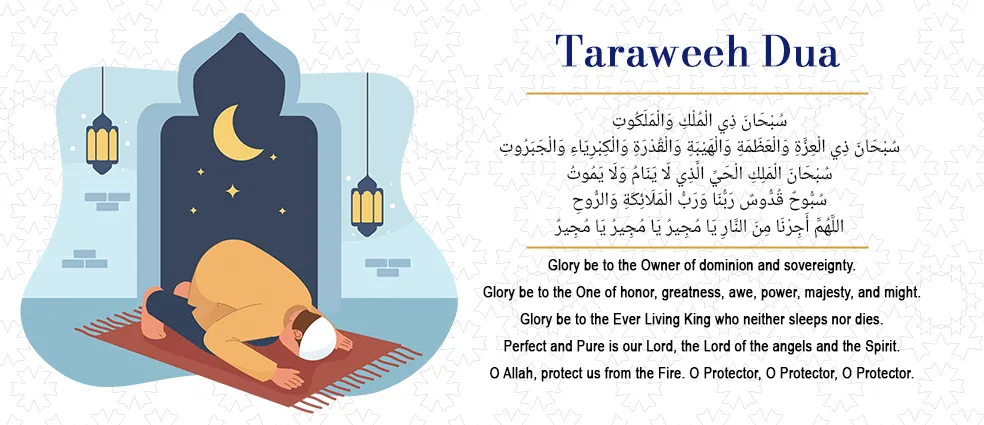
Transliteration
Subhana dhil mulki wal malakut
Subhana dhil 'izzati wal 'azamah wal haybah wal qudrati wal kibriya'i wal jabarut
Subhanal malikil hayyil ladhi la yanamu wa la yamut
Subbuhun quddusun rabbuna wa rabbul mala'ikati war ruh
Allahumma ajirna minan nar ya mujiru ya mujiru ya mujiru
Best Duas to Recite During Taraweeh Prayer
You are not limited to one supplication. In fact, varying your duas often brings more presence and sincerity.
Dua for Forgiveness

Transliteration
Allahumma innaka 'afuwwun tuhibbul 'afwa fa'fu 'anni
Dua for Mercy and Guidance
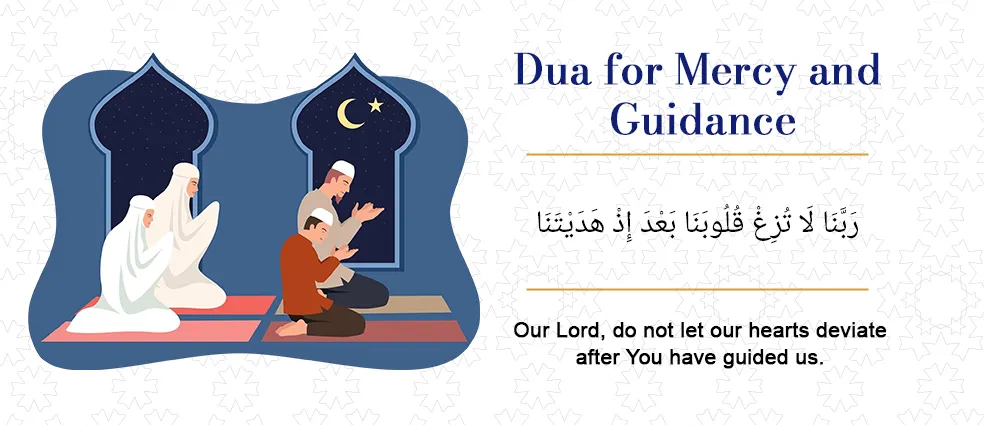
Transliteration
rabana la tuzigh qulubana baed 'iidh hadaytana
Dua for Protection from Hellfire

Transliteration
allahuma 'ajirna min alnaar
Short. Direct. Powerful.
When to Make Dua in Taraweeh Prayer
You can make dua at several points, without complication.
- During sujood. This is one of the strongest moments for supplication.
- During the short rest between sets of rak'ahs.
- After completing Taraweeh and before leaving.
- In the last ten nights of Ramadan, with extra focus.
There is no single correct moment. What matters is presence and intention.
As you prepare to make the most of your nightly prayers, having a clear Ramadan schedule can help you stay organized and focused. Check out our Ramadan 2026 calendar to plan your worship and fasting in advance.
Can You Make Personal Dua During Taraweeh?
Yes. Absolutely.
You may make personal supplications quietly in your heart or softly on your tongue. You may ask in Arabic or in your own language.
Allah understands all languages. He responds to sincerity, not fluency.
Memorization is not a requirement. Presence is.
Difference Between Taraweeh Dua and Witr Dua
This confusion is common.
Taraweeh dua refers to optional supplications made during the night prayer.
Witr dua, specifically dua al qunoot, is a known supplication recited in Witr prayer.
They are not the same.
One should not replace the other.
And neither should be treated as compulsory unless supported by clear evidence.
Common Misconceptions About Taraweeh Dua
- There is no mandatory Taraweeh dua.
- Dua does not have to be in Arabic.
- Silence between rak'ahs is not sinful.
- Cultural practice does not automatically equal Sunnah.
Clarity here protects sincerity.
Taraweeh Dua Quick Reference (English)
- Asking for forgiveness is always appropriate.
- Asking for mercy aligns with Ramadan.
- Asking for protection from Hellfire reflects prophetic teaching.
- Personal duas are welcome at all times.
Simple is often better.
Key Takeaway on Dua for Taraweeh
Taraweeh is not a scripted ritual built around one supplication. It is a night prayer meant to soften the heart, revive faith, and draw a person closer to Allah.
Use the known duas if they help you focus. Leave them if they do not. Make space for your own words. Ask honestly. Ask often.
That is the spirit of Ramadan.
FAQs About Taraweeh Dua
Can I recite the Taraweeh dua in English?
Yes. Especially for personal supplication.
Is dua between Taraweeh rak'ahs Sunnah?
It is permissible, not an established Sunnah.
What is the best dua for Taraweeh prayer?
Any sincere dua that brings humility to the heart.
Can women recite the Taraweeh dua at home?
Yes. The rulings are the same.