



Safa Marwa Dua (Complete Guide with Arabic, English, Meaning, and How to Perform Sa'i)
 14 Feb 26
Ramadan Fasting Rules for Travelers and Umrah Pilgrims (Islamic Rulings + Practical Guidance)
13 Feb 26

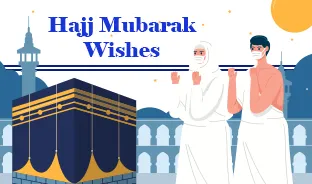
Hajj is one of the most important moments in a Muslim's life. It is not just a journey across countries. It is a deep act of worship that many people wait their whole lives to complete. For Muslims in the United States, Hajj often carries even more meaning because it requires long planning, big sacrifices, and time away from work and family.
When pilgrims return home, communities gather around them with warmth and respect. One of the first things people say is Hajj Mubarak. These words may sound simple, but they carry strong spiritual and emotional meaning. They recognise effort, patience, and faith.
In American Muslim communities, welcoming someone back from Hajj is a special moment. It can happen at the airport, at the masjid, or quietly at home. Saying the right words at the right time helps make that moment meaningful and respectful.
What Does "Hajj Mubarak" Mean?
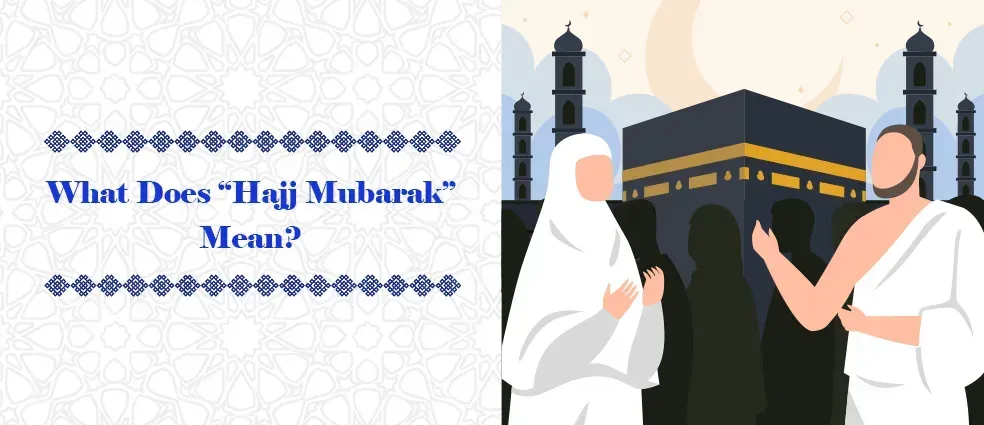
The phrase Hajj Mubarak means "May your Hajj be blessed." It is a prayer, not just a greeting. When someone says it, they are asking Allah to accept the pilgrim's worship and reward their effort. Hajj itself is one of the five pillars of Islam. That means it is a core duty for Muslims who are able to perform it. Because of this, completing Hajj is a major spiritual milestone.
Difference Between "Hajj Mubarak" and "Hajji"
In some cultures, people call someone Hajji after they return from Hajj. This word simply means a person who has completed Hajj. It is more of a title or description. Hajj Mubarak is different. It is a prayer and a moment of respect. It focuses on acceptance and blessing, not just status.
Why the Phrase Matters After Hajj Is Completed
Hajj Mubarak is usually said after Hajj, not before. That is because Hajj is complete only when all rituals are performed. Saying it afterwards shows respect for the full journey, including the physical effort and emotional growth.
Why Hajj Mubarak Wishes Matter in US Muslim Communities
Here's why.
Shared Faith in a Minority Setting
Muslims in the United States often live as a small part of the wider society. Daily life includes work, school, and social spaces where Islam may not always be visible or understood. Because of this, shared religious moments become extra meaningful. They remind people who they are and what they believe in.
Saying Hajj Mubarak is one of those moments. It helps Muslims feel seen and connected, even when living far away from Makkah and the places where Islam began. For many American Muslims, these small shared traditions help keep faith rooted in everyday life. They pass belief from one generation to the next, especially to children who grow up balancing different cultures.
Strengthening Community Bonds
When someone returns from Hajj, they often come back changed in small but noticeable ways. They may speak more softly, show more patience, or share thoughtful reflections. Community members sense this and feel inspired by it. Saying Hajj Mubarak is a way of honouring that effort and growth.
These moments happen naturally. In mosques after prayer. At family dinners. In short conversations after Jummah. Each greeting helps strengthen trust and warmth within the community.
Welcoming Pilgrims Home in American Muslim Culture
In the United States, welcomes are usually modest and personal. There may not be large ceremonies or formal events. Instead, people show care through simple actions. A home visit. A shared meal. A thoughtful message. Hajj Mubarak fits perfectly into this culture. For returning pilgrims, hearing these words helps them feel supported as they transition back into normal life.
When to Say Hajj Mubarak
When to say Hajj Mubarak is often tied to understanding the Hajj dates and the completion of the main rituals.
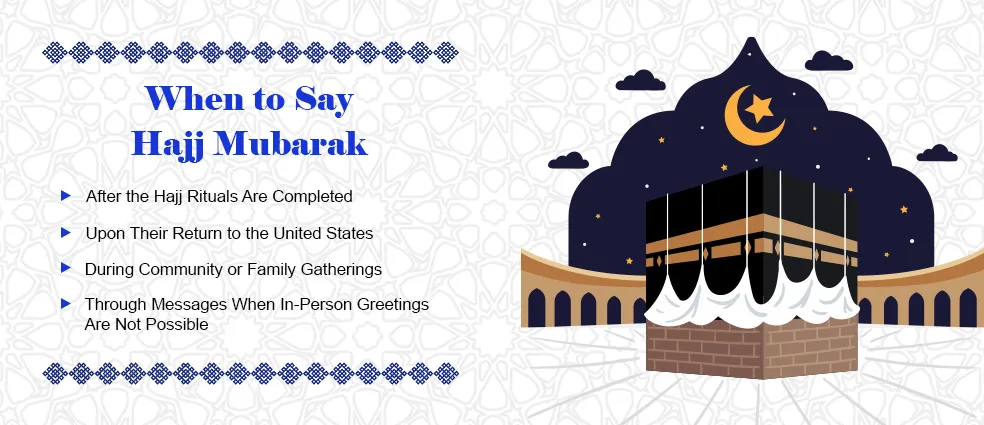
After the Hajj Rituals Are Completed
The most appropriate time to say Hajj Mubarak is after the pilgrim has completed all the main Hajj rituals. Hajj is not considered complete until these acts are finished. Saying 'Hajj Mubarak' too early can feel rushed and may unintentionally imply acceptance before the journey is over.
Waiting until completion shows understanding and respect. This timing also reflects humility. Only Allah accepts Hajj. Saying Hajj Mubarak after completion leaves space for prayer, gratitude, and reflection rather than assumption.
Upon Their Return to the United States
Another common and meaningful moment to say Hajj Mubarak is when the pilgrim returns home. This is often when the emotional weight of the journey becomes visible. Pilgrims leave a sacred space and return to daily life, which can feel overwhelming. Hearing Hajj Mubarak during this time feels comforting. This may happen at the airport, during a visit to the masjid, or in a quiet family gathering.
In American Muslim culture, this moment often includes short conversations, gentle questions, and sincere listening.
During Community or Family Gatherings
Some people wait to say "Hajj Mubarak" in a group setting. This could be a family dinner, a mosque gathering, or a small community event. Saying it publicly allows others to join in and show support together. This shared moment helps build a connection. For children and younger community members, seeing this respect helps them understand the importance of Hajj.
Through Messages When In-Person Greetings Are Not Possible
Not everyone can greet a pilgrim face-to-face. In these cases, sending a message is also appropriate. Text messages, phone calls, or written notes allow people to share their wishes with sincerity. Even a short message can carry meaning when it is thoughtful. The key is timing and intention, not the length of the greeting.
Meaningful Hajj Mubarak Wishes
Sometimes, simple words say the most. Not every message needs to be long or emotional. A calm and sincere wish often feels more respectful, especially when shared at the right moment. Meaningful wishes focus on acceptance, peace, and positive change. They are not about praising the person, but about recognising the journey they completed for Allah.
When Simplicity Is the Right Choice
In workplaces, mosques, or with people you do not know closely, simple wishes are the best option. These settings call for respect without being too personal. Short phrases feel natural and appropriate.
Examples of simple and respectful wishes include:
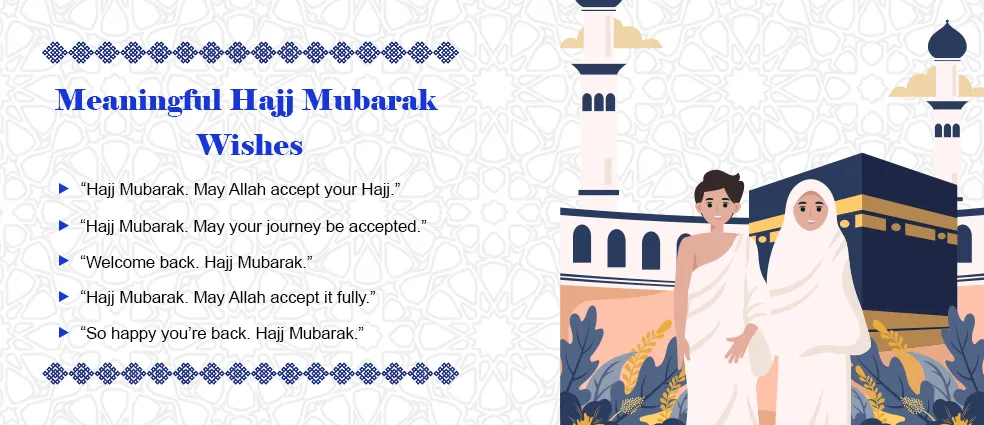
- "Hajj Mubarak. May Allah accept your Hajj."
- "Hajj Mubarak. May your journey be accepted."
- "Welcome back. Hajj Mubarak."
- "May Allah reward you for your Hajj."
These phrases work well in public spaces and casual interactions. They show care without crossing personal boundaries.
Duas to Include in Your Message
Many people add a short dua, which means a prayer. A dua asks Allah for something good. Adding a dua makes the wish deeper and more meaningful by turning the message into a form of worship.
Simple dua-based wishes include:
- "Hajj Mubarak. May Allah accept your Hajj and forgive your sins."
- "May Allah accept every step you took and every prayer you made."
- "Hajj Mubarak. May this journey bring peace and closeness to Allah."
Wishes for Family Members
When parents, spouses, or elders return from Hajj, wishes often carry more emotion. These messages recognise sacrifice, patience, and effort. Family members may mention pride, gratitude, and respect in their words.
Examples include:
- "Hajj Mubarak. We are so grateful Allah gave you this journey."
- "May Allah accept your Hajj and bless you with health and peace."
- "Your patience and faith inspire us. Hajj Mubarak."
Wishes for Friends and Community Members
For friends, neighbours, or masjid members, warm and balanced language works best. These wishes sit between formal and personal. They are friendly without being too emotional.
Examples include:
- "Hajj Mubarak. May Allah accept it fully."
- "So happy you're back. Hajj Mubarak."
- "May Allah bring barakah into your life after Hajj."
These messages feel natural in conversations and help maintain strong community connections.
Hajj Mubarak Wishes in English and Arabic
Many people use Arabic phrases along with English. Arabic adds spiritual depth, even when used simply. It connects the message to Islamic tradition and worship.
Common phrases include:
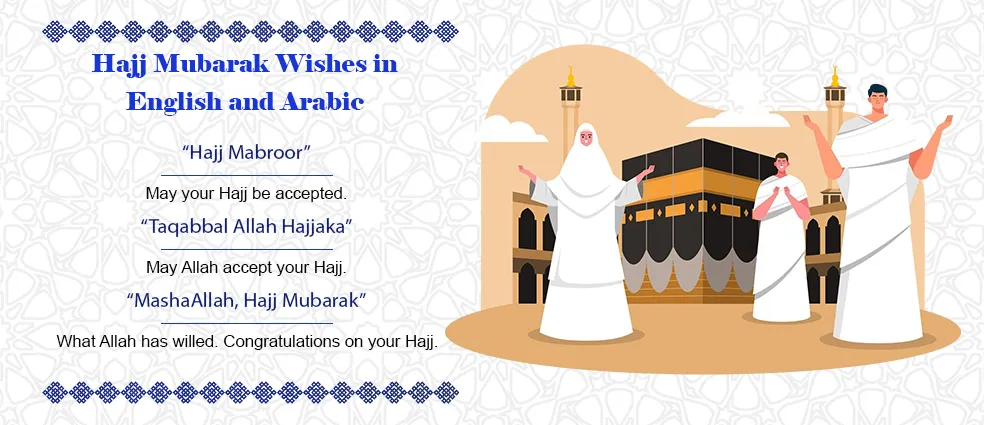
"Hajj Mabroor"
Meaning: May your Hajj be accepted.
"Taqabbal Allah Hajjaka"
Meaning: May Allah accept your Hajj.
"MashaAllah, Hajj Mubarak"
Meaning: What Allah has willed. Congratulations on your Hajj.
These phrases are often paired with English so everyone understands the message.
Why Bilingual Wishes Are Common in the US
American Muslims come from many backgrounds. Some are fluent in Arabic. Others are not. Mixing English and Arabic helps include everyone. Bilingual wishes allow elders, children, converts, and non-Arabic speakers to feel comfortable. They keep traditions alive while staying accessible.
Using Arabic Respectfully
Using Arabic does not require perfection. Pronunciation does not need to be flawless. What matters is intention and respect. Speaking slowly, with care, is always better than avoiding Arabic out of fear. Most people appreciate the effort and sincerity behind the words.
Common Mistakes to Avoid
Here's what you should avoid.
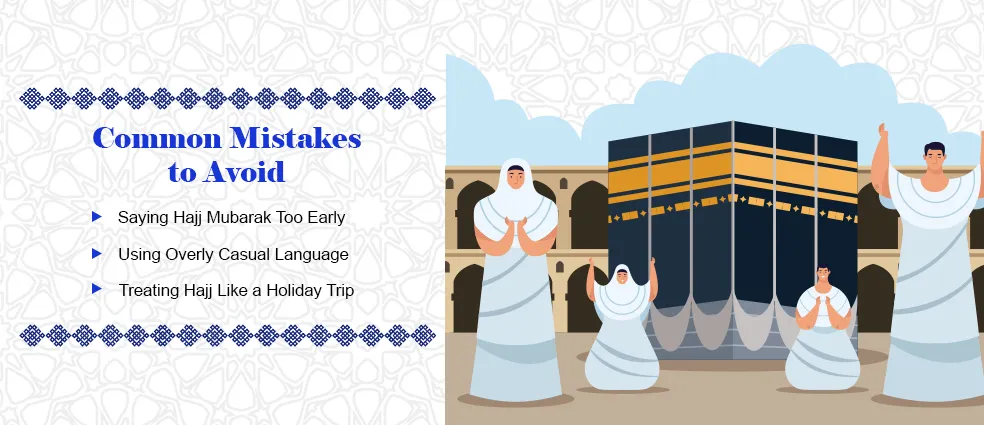
Saying Hajj Mubarak Too Early
One common mistake is saying Hajj Mubarak before the pilgrim has completed all the Hajj rituals. Hajj is not finished until the final acts are done. Saying it too early can feel rushed or careless, even if the intention is good. Waiting shows patience and understanding. It respects the seriousness of the journey and the effort involved.
Using Overly Casual Language
Another mistake is using jokes, slang, or overly relaxed language. Hajj is not a casual event. It is one of the most important acts of worship in Islam. Words that sound playful or light may not match the moment. Keeping the tone calm and respectful helps honour the meaning of Hajj and the pilgrim's experience.
Treating Hajj Like a Holiday Trip
Sometimes people speak about Hajj as if it were a vacation. Comments about shopping, sightseeing, or travel fun can miss the point. Hajj involves sacrifice, physical effort, and deep spiritual focus. It is better to speak about faith, patience, prayer, and gratitude rather than travel comfort or enjoyment.
Welcoming Pilgrims Home: Beyond Words
There are some things you can do that aren't verbal.
Hosting Small Gatherings
Many families choose to welcome pilgrims home with a simple meal or visit. These gatherings are usually quiet and warm, not formal events. The goal is connection, not celebration. Even tea and conversation can feel meaningful. What matters is presence and care, not scale or expense.
Giving Thoughtful Gifts
Small gifts are a common way to show love and respect. These gifts do not need to be expensive. A prayer mat, dates, or a handwritten note can carry deep meaning. The intention behind the gift matters more than the object itself. It is a gesture of kindness, not an obligation.
Listening With Respect
Many pilgrims want to share what they felt, learned, or struggled with during Hajj. Giving them space to speak is one of the most respectful acts. Listening without rushing, interrupting, or judging allows pilgrims to reflect and process their journey. Sometimes, quiet attention means more than any words.
Final Thoughts
Hajj Mubarak's wishes are more than words. They reflect faith, care, and community. In the United States, where Muslims balance faith with daily life, these moments help keep traditions strong. Saying Hajj Mubarak with sincerity strengthens bonds and honours worship. It reminds everyone that faith continues long after the journey ends.
For Muslims in the United States seeking practical guidance for their own Hajj journey, Alhamd Travel offers Hajj packages that support pilgrims through the preparation and travel process.
FAQs
Is it okay to say Hajj Mubarak through a message instead of in person?
Yes. Saying Hajj Mubarak through a message is completely acceptable, especially if distance or timing makes in-person greetings difficult. What matters most is sincerity, not the method. A thoughtful message can still carry warmth and respect.
Can non-Muslims say Hajj Mubarak to Muslim friends or colleagues?
Yes, they can. When said with respect, it is often appreciated. It shows care and understanding. Many Muslims welcome this gesture, especially in diverse workplaces and communities in the United States.
Should Hajj Mubarak be said to someone who struggled during Hajj?
Yes. Hajj is difficult for many people. Physical strain, heat, crowds, and emotional moments are common. Saying Hajj Mubarak recognises the effort, not ease. It honours perseverance, not perfection.
Is it wrong to add personal compliments in a Hajj Mubarak message?
It is better to keep the focus on the journey and worship rather than personal praise. Gentle appreciation is fine, but excessive compliments can shift attention away from the spiritual meaning of Hajj.
Can Hajj Mubarak be said during Eid al-Adha gatherings?
Yes, if the pilgrim has completed Hajj or is returning around that time. Eid al-Adha often overlaps with Hajj, and many families combine greetings naturally. Timing and tone should still remain respectful.
Do people say Hajj Mubarak differently to men and women?
The words themselves stay the same. What may change is tone based on the relationship and comfort level. Respect and modesty guide how greetings are shared, not gender.
Is it okay if the pronunciation is not perfect?
Yes. Perfect pronunciation is not required. Intention matters more than accuracy. Most people appreciate the effort and sincerity behind the words.
Can Hajj Mubarak be said years later when someone mentions their Hajj?
Yes. While it is most common right after Hajj, saying it later is still respectful. It can be a way to honour their journey when it naturally comes up in conversation.
Should children be encouraged to say Hajj Mubarak?
Yes. Teaching children to say Hajj Mubarak helps them learn respect, manners, and the importance of Hajj. It also helps pass Islamic traditions naturally within families.
Does saying Hajj Mubarak replace making dua?
No. Hajj Mubarak is a greeting. Making dua for acceptance, forgiveness, and continued guidance is more meaningful. Both together create the best intention.